
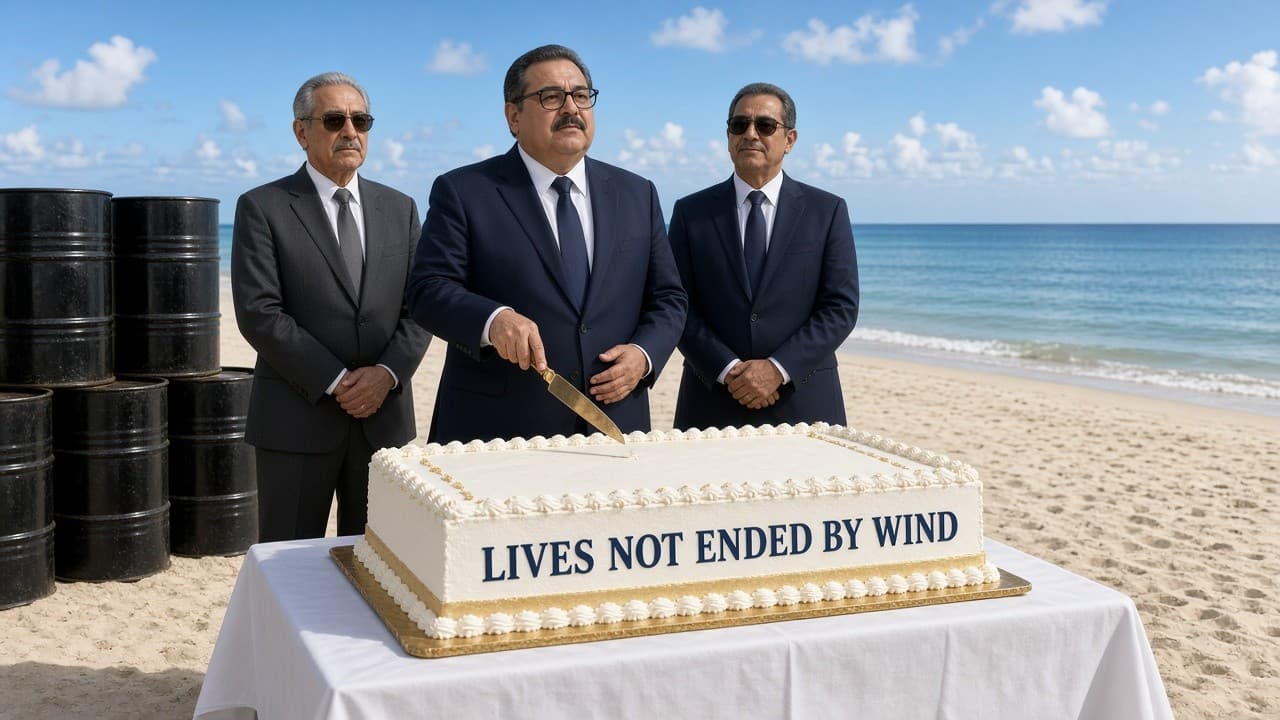
VIENNA — OPEC held a brief ceremony Monday thanking fossil fuels for a quiet Atlantic hurricane season, formally claiming credit for thousands of lives that were not ended by wind and asking climate activists to please stop trying to undo the cartel’s humanitarian work.
“We warmed the planet. The storms went quiet. People who would otherwise have been evacuated, insured, or deceased are instead grilling outdoors,” said OPEC secretary-general Haitham Al-Ghais, speaking beside a cake iced with the words Lives Not Ended By Wind. “This is what success looks like when you measure outcomes instead of vibes.”
According to OPEC’s new sustainability metric, “lives not ended by wind,” each barrel of oil burned since the Industrial Revolution has contributed fractionally to atmospheric conditions that, in the cartel’s accounting, suppressed hurricane formation in 2026. Officials declined to publish the full formula, citing proprietary climate modeling and also that the formula was mostly a press release.
Climate activists rejected the claim immediately, arguing that global warming both causes more hurricanes and, when there are fewer hurricanes, also causes fewer hurricanes, and that either outcome proves oil must be stopped.
“The pleasant season Florida is having is a debt we refuse to acknowledge,” said protester Byron Bridges. “OPEC does not get to invent a humanitarian award for itself by changing the weather in a way that happens to kill fewer people this particular year.”
OPEC spokespeople said that was precisely the point. “If your model predicted more death and we delivered less death, you are free to revise the model,” said communications director Amira Haddad. “You are not free to keep fundraising as if the less-death year still counts as more death.”
Meteorologists, invited to the ceremony only as seating fillers, insisted the quiet season was ordinary weather. “La Niña, wind shear, and chance remain legal,” said National Hurricane Center forecaster Luis Ortega. “No cartel press kit overrides the atmosphere.”
OPEC called that framing unsafe for fundraising and also ungrateful. The organization unveiled a draft “Hurricane Avoidance Dividend,” payable in recognition plaques and optional gasoline gift cards, to coastal counties that experienced fewer named storms than activist literature had promised.
Several counties declined the plaques, citing confusion about whether accepting one constituted admission that oil had saved them. “We would prefer the storms stay away for boring reasons,” said Miami-Dade County spokesperson Renee Colton. “Boring reasons do not require a cake.”
Activists warned that celebrating a quiet season would encourage the public to like fossil fuels, which would lead to more warming, which would lead to more storms, which would then be blamed on activists for not stopping the warming that OPEC was now taking credit for stopping the storms with.
“Any change the weather does is bad unless we said it first,” explained climate activist Gina Hampton. “Hot. Cold. No hurricanes. Some hurricanes. If OPEC smiles about it, it is definitely bad.”
Critics suggested both sides chill out, which activists interpreted as a threat of intentional global cooling — also bad — and which OPEC interpreted as an endorsement of continued drilling under a wellness brand.
At press time, OPEC was drafting a follow-up claim for credit over sunny park days, arguing that without industrial CO₂ the outdoors would still be “mostly glaciers and guilt,” while activists were seen panicking after a pleasant afternoon that threatened to overcrow crowded beaches with people who had not drowned.